
✓
A real diagnosis, not a parts guess
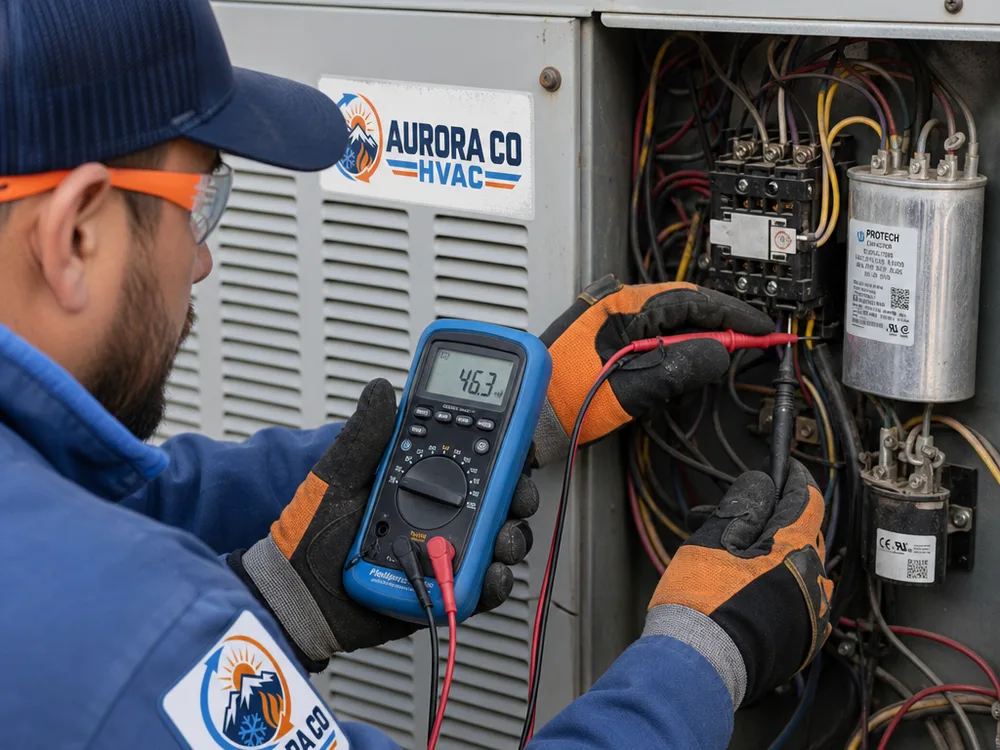
We verify voltage, amperage, temperature split, static pressure indicators when accessible, and refrigerant conditions as needed, so the repair targets the cause, not the symptom.
Serving Aurora, Colorado & surrounding areas
When your AC quits in the middle of a hot Aurora day, you need a tech who can diagnose fast, explain the fix clearly, and get cool air moving again without runaround.
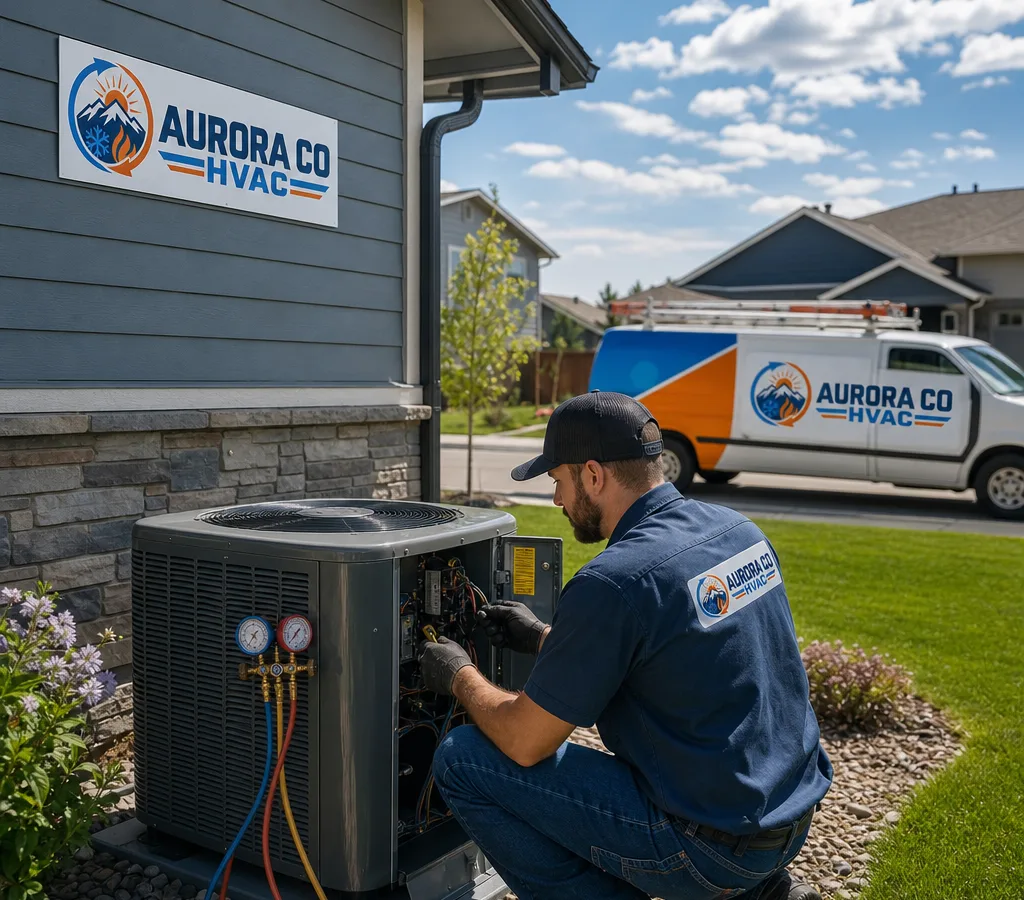
If you searched for a c repair aurora co, you are probably dealing with one of two problems: the system is not cooling at all, or it is cooling poorly and running nonstop. Aurora CO HVAC provides ac repair in Aurora with a straightforward approach: confirm the symptom, measure what the system is doing—pressures, temperatures, airflow, and electrical operation—identify the actual failure, then walk you through repair options before work starts.
Aurora summers can swing from mild mornings to hot afternoons, and that temperature jump exposes weak parts fast: failed capacitors, pitted contactors, low refrigerant from a leak, or an evaporator coil freezing from airflow issues. We focus on restoring reliable cooling and keeping the system safe to operate.
You can get help with common breakdowns including:
If you are comparing contractors, start with the basics: clear diagnosis, itemized pricing, and a plan that matches the age and condition of your equipment. For broader heating and cooling support beyond repairs, our team at HVAC Aurora Colorado can help you plan next steps when it makes sense.
We verify voltage, amperage, temperature split, static pressure indicators when accessible, and refrigerant conditions as needed, so the repair targets the cause, not the symptom.
You will hear what failed, why it matters, and what the repair changes. If there are multiple reasonable paths, we lay them out plainly.
If low refrigerant is suspected, we treat it as a leak problem, not a top-off. Proper leak checking and the correct charge matter for compressor life and cooling performance.
A repaired outdoor unit still will not cool well if the indoor coil is dirty, the filter is clogged, or the blower is not moving enough air. We watch for those missable causes.
We document what we found and what was done so you are not starting from zero the next time the system is serviced.
We work to get you on the schedule quickly and give a realistic arrival window, especially during peak hot spells when AC failures pile up across Aurora.
Most no-cool calls come down to a few repeat offenders. The trick is confirming which one is actually happening in your system.
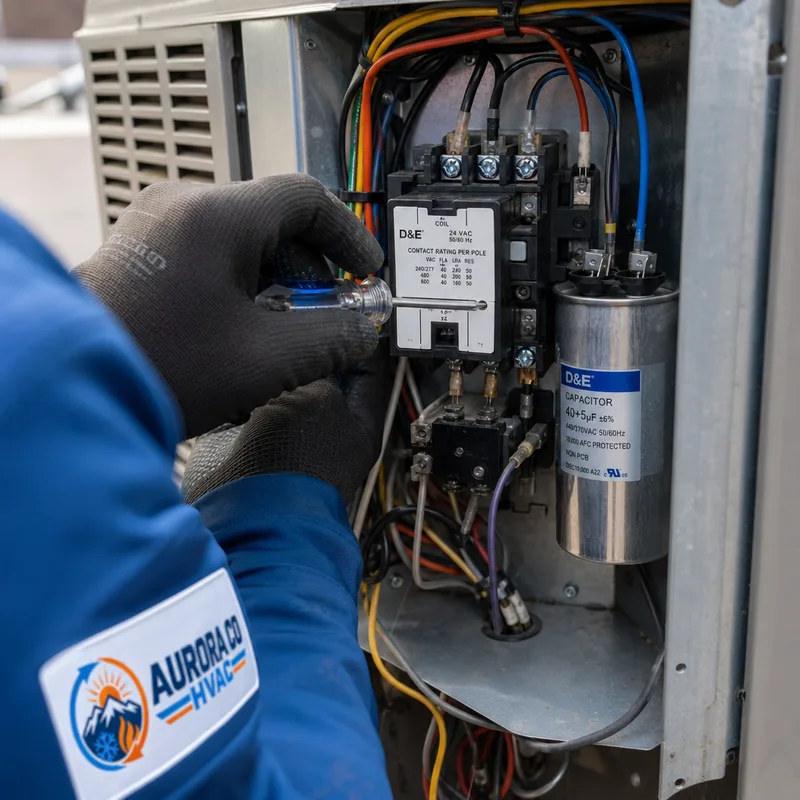
Capacitor failure: A weak or failed run capacitor can keep the compressor or fan from starting. You may hear humming, see the outdoor fan not spinning, or notice the breaker tripping.
Contactor and electrical wear: Contactors pit over time. Loose lugs, overheated wires, and failing disconnect components can also create intermittent shutdowns.
Refrigerant leak or incorrect charge: Low charge often shows up as longer runtimes, poor cooling, and sometimes ice on the refrigerant lines or indoor coil. Correct repair means finding the leak source when feasible, fixing it, and charging to spec.
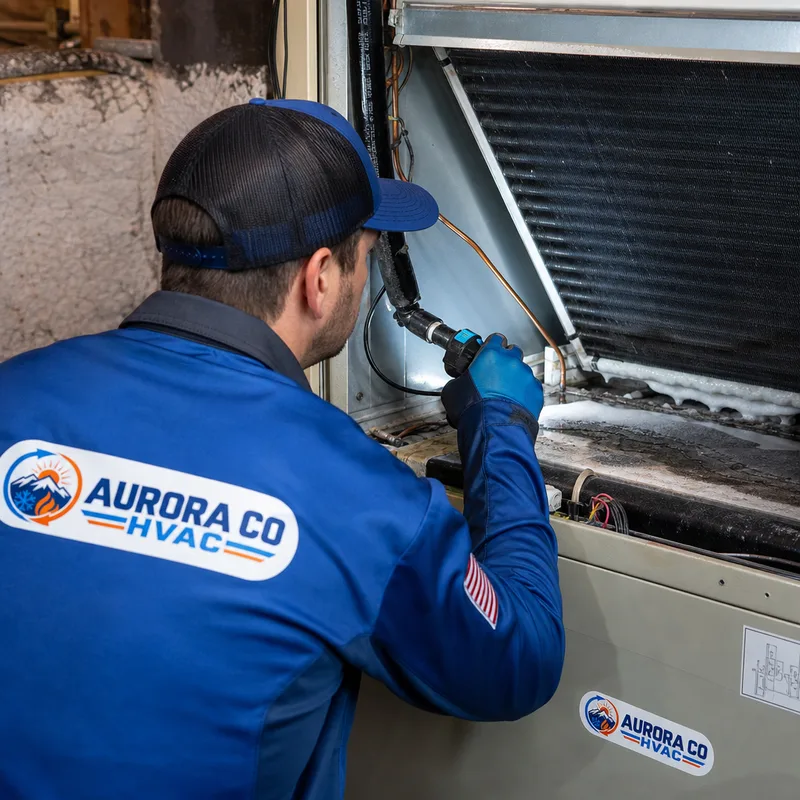
Frozen evaporator coil: This is usually airflow-related—dirty filter, dirty coil, failing blower, or closed vents—but can also be linked to refrigerant issues. We identify which one applies before recommending a fix.
Fan motor problems: An outdoor fan motor that is overheating or slowing down can cause high head pressure and shutdowns. Indoors, a blower problem can mimic a refrigerant issue because the coil cannot absorb heat.
If your system is in a newer build around the 80018 area, the layout often places equipment in tighter mechanical spaces. Access matters for inspection and leak checking, and we plan the service accordingly so the diagnosis is still complete, not rushed.
We start with what you are seeing—no cool, weak airflow, short cycling, noises, or water—and any recent changes like a thermostat swap or a filter that loaded up quickly.
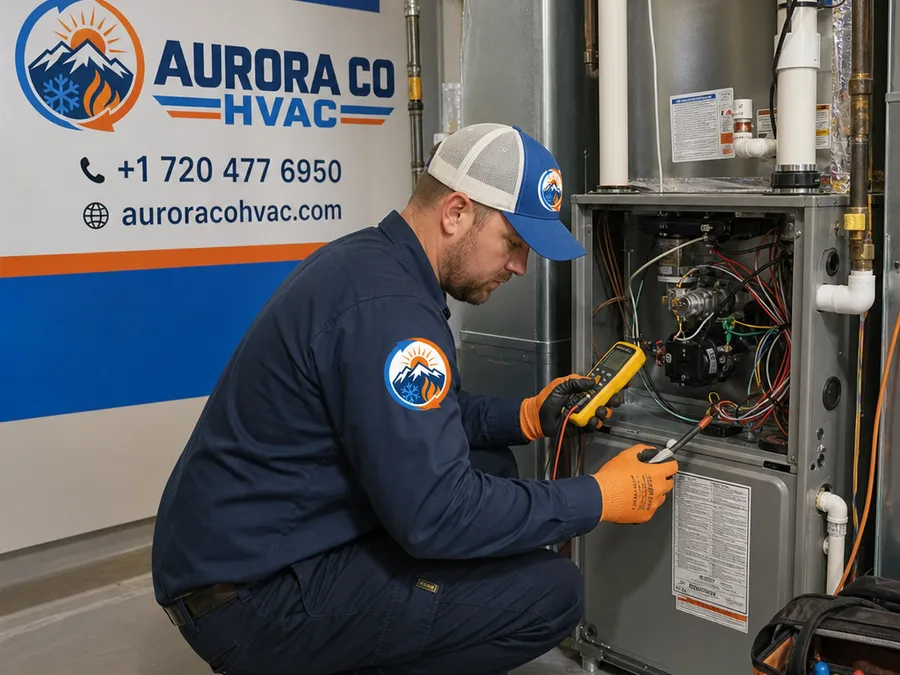
We check thermostat signals, safeties, breakers and disconnect, capacitors, contactors, fan and compressor operation, and temperature readings across the indoor coil. When refrigerant performance is involved, we verify pressures and charging indicators.
You get the failure point in plain language and what it means for reliability. If there is a repair path that is not worth it due to equipment condition, we tell you that too.
After the fix, we re-test startup behavior, temperature split, stable pressures when applicable, and normal cycling so you can feel confident the issue is resolved.
If we see a dirty coil, restricted filter setup, or drain issue that contributed to the breakdown, we point it out so you can avoid a repeat failure during the next hot stretch.
Most ac repair in Aurora typically runs about $200 to $1,200+, depending on the failure and parts required. Smaller electrical fixes, like a capacitor or contactor replacement, often land around $200 to $600, while refrigerant leak diagnosis and repair, recharging, motor replacements, or control board issues more commonly run $600 to $1,200+.
Your final price depends on the exact part, accessibility of the equipment, whether refrigerant work is needed, and whether the failure caused secondary issues like a frozen coil. The exact cost is confirmed after the on-site diagnosis and a written scope of work.
Same-day availability is often possible, especially for no-cool situations, but it depends on current demand during hot weather spikes. The fastest way to get scheduled is to share the symptom and your equipment type so we arrive prepared.
Warm air with the system running is commonly caused by low refrigerant from a leak, a dirty or frozen indoor coil, or a problem with the compressor or outdoor fan. A proper diagnosis checks airflow and indoor coil conditions first, then verifies refrigerant performance and electrical operation.
It is usually worth repairing when the failure is a straightforward electrical component or a single worn part and the system is otherwise in decent shape. Replacement becomes the better choice when the compressor is failing, a refrigerant leak is extensive or hard to access, or repeated repairs are stacking up.
Recharging without addressing the leak is typically a temporary move because the refrigerant will escape again. If low charge is confirmed, we treat it as a leak problem and discuss leak detection, repair feasibility, and correct charging to manufacturer specifications.
A frozen evaporator coil usually points to low airflow from a dirty filter, blocked return, dirty coil, or blower issue, or a refrigerant-related problem that drops coil temperature too low. We check both airflow and refrigerant indicators before recommending repairs.
Set the thermostat to cool and lower than room temperature, check that the air filter is not fully clogged, and confirm the circuit breaker and outdoor disconnect are on. If it still will not start, stop cycling the thermostat and schedule service.
Yes, we handle common repair needs on both central air systems and ductless equipment, including electrical failures, airflow-related issues, and refrigerant performance problems. When requesting service, note the system type and number of indoor heads for ductless equipment.
Tell Aurora CO HVAC what your AC is doing—no cool, weak airflow, ice, noise, or breaker trips—and when it started. We will schedule a diagnostic in Aurora, explain the repair options clearly, and restore dependable cooling as quickly as possible.