✓
A real diagnosis, not parts guessing
We use manufacturer fault codes, temperature rise checks, draft and combustion safety basics, and meter readings to confirm the failure before recommending a repair.
Serving Aurora, Colorado & surrounding areas
Heat not keeping up, short-cycling, or making new noises? Get a clear diagnosis, transparent options, and repairs that bring your system back to safe, steady comfort.
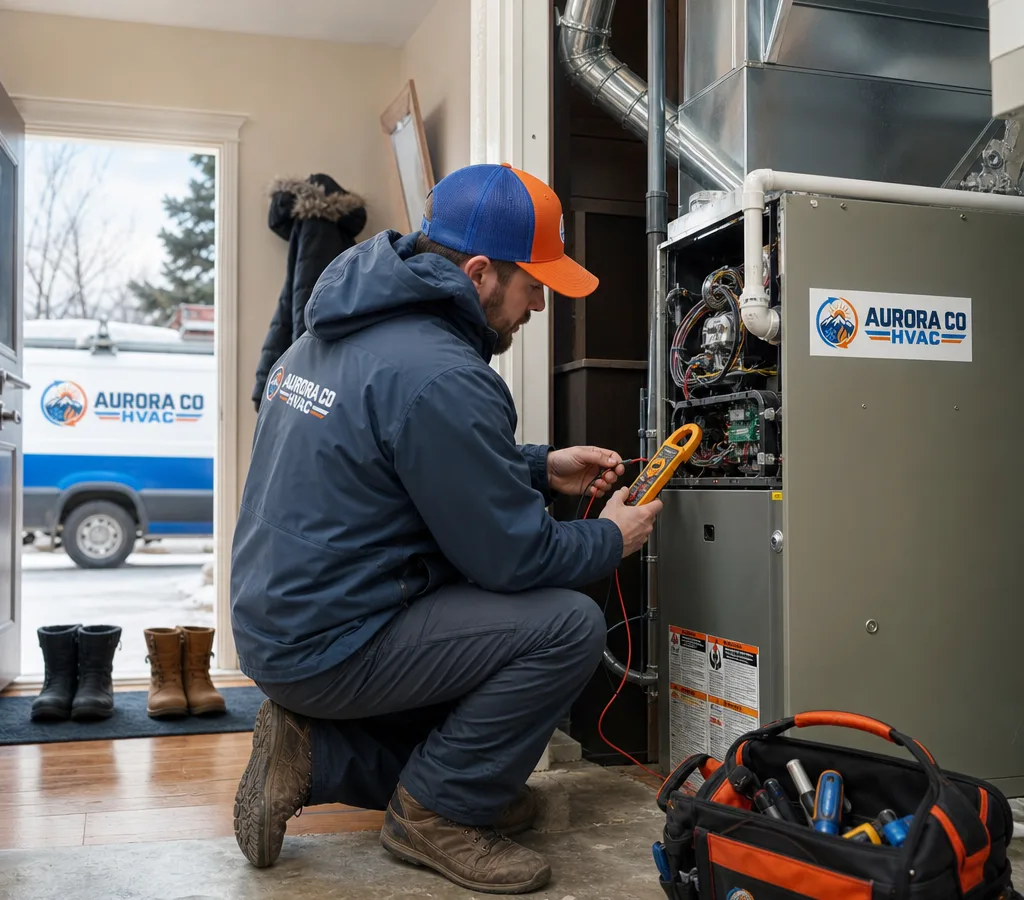
When the temperature drops on the Front Range, a furnace problem turns into a house problem fast. Aurora CO HVAC handles aurora furnace repair with the basics done right: safe troubleshooting, straightforward pricing, and quality parts that match your equipment.
If you are in a newer community near Southlands or Murphy Creek, we commonly see high-efficiency furnaces with pressure switches, condensate drains, and intake or exhaust piping that can create nuisance shutdowns. If you are closer to older pockets around Del Mar Parkway or parts of City Center, you may have an older 80% furnace that needs different parts and different venting checks. Either way, the goal is the same: restore heat safely and keep it running consistently through the next cold night.
If you are looking for a broader look at heating and cooling help year-round, our HVAC services cover maintenance, troubleshooting, and system options beyond furnace repair.
We use manufacturer fault codes, temperature rise checks, draft and combustion safety basics, and meter readings to confirm the failure before recommending a repair.
Heat exchanger red flags, flame signal, rollout or limit switch trips, venting condition, and gas and electrical connections are checked as part of responsible heating repair.
You get the repair path that makes sense for your furnace's age and condition, plus a written explanation of what failed and what we are doing to fix it.
Igniters, flame sensors, capacitors, pressure switches, control boards, and motors are selected to match the model requirements, not just whatever fits.
After the repair, we run the full heating cycle, confirm stable flame and airflow, and verify the thermostat and safeties are behaving normally.
Most calls for furnace repair Aurora come down to a short list of failures. The symptom matters because it points to where to test first.
Aurora's dry winter air also makes dirty filters and static-prone airflow issues show up quickly. A filter that looks only slightly gray can still be restrictive when it is packed with fine dust.
If your system is fully down, try the simple checks first: thermostat set to heat, fresh batteries if applicable, a clean filter, and a clear intake or exhaust termination outdoors if you have PVC pipes. If it still will not run, it is time for a diagnostic so you do not accidentally bypass a safety.
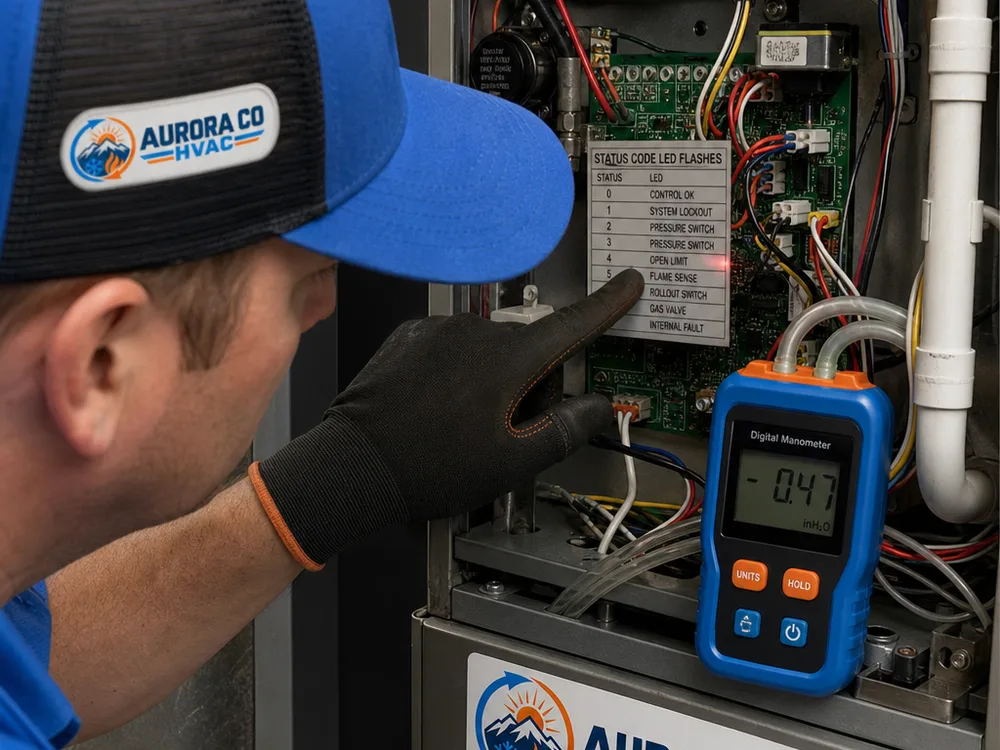
We ask what you noticed (error code, smell, noise, when it fails) and confirm model and fuel type so the diagnostic starts in the right place.
We check power, thermostat call, sequence of operation (inducer, pressure switch, ignition, flame proving, blower), and safety circuits to pinpoint the failure.
You get a clear explanation of the cause, the repair choices, and the price before work begins. If a repair does not make sense, we will say so.
After replacement or adjustment, we test the full cycle, confirm stable operation, and re-check airflow and temperature rise so the system is not running stressed.
We leave you with practical guidance such as filter type and change frequency, condensate drain care for high-efficiency units, and what warning signs to watch for.
Aurora furnace repair typically runs about $200 to $1,200+, depending on the part, the diagnostic time, and whether the furnace is standard-efficiency or high-efficiency. Smaller fixes like a flame sensor cleaning or igniter replacement often land in the lower end, while control boards, inducer motors, and complex electrical issues can reach the higher end.
Your final price depends on the failure point, parts availability for your exact model, after-hours timing, and any related issues found during safe operation checks (like airflow restrictions or condensate drain problems). Exact pricing is confirmed after an on-site diagnostic.
Same-day furnace repair is often possible when schedule and parts availability line up, especially for common failures like igniters, flame sensors, capacitors, and some pressure switches. If your heat is out, share the symptoms and any blink code you see so we can plan the right diagnostic approach.
Short-cycling is commonly caused by a dirty filter leading to an overheated limit switch, a dirty or weak flame sensor that cannot prove flame, or a pressure switch/venting issue on high-efficiency furnaces. The correct fix depends on which safety is opening, so a proper test of the sequence of operation is the fastest way to avoid replacing the wrong part.
If you smell gas, treat it as urgent and do not keep running the furnace; leave the home if needed and contact the gas utility for safety guidance. A brief dusty smell at the first heat cycle of the season can be normal, but a persistent burning smell, scorching odor, or visible soot needs a professional inspection before continued use.
We repair older furnaces when the fix is safe and makes sense for the condition of the unit. If we see red flags like suspected heat exchanger damage, repeated safety trips, or multiple major parts failing at once, we will explain why replacement may be the wiser choice and what your options are.
Start with safe basics: confirm the thermostat is set to heat and above room temperature, replace thermostat batteries if it uses them, check the furnace switch and breaker, make sure the filter is clean, and confirm the furnace door panel is fully seated. If you have a high-efficiency furnace with PVC intake/exhaust, make sure the outdoor terminations are not blocked by snow or debris.
Yes, furnace repair can include gas furnaces and electric furnaces, and the diagnostic approach differs between them. Gas furnaces involve ignition and flame proving checks, while electric furnaces focus more on sequencer or relay operation, heating elements, and airflow and limit controls.
A furnace can blow cold air if it is failing to ignite, if the burners shut off and the blower continues on a delay, or if the thermostat fan setting is set to ON instead of AUTO. A technician will verify ignition, flame signal, and control board behavior to determine whether the issue is a component failure, a safety shutdown, or a thermostat setup problem.
Tell us what the furnace is doing (and any error code you see) and we will schedule a diagnostic in Aurora, explain the repair options clearly, and restore safe, reliable heat as quickly as we can.